

The United States and Japan are parties to a defense and security alliance established by a Treaty of Mutual Cooperation and Security signed on September 8, 1951, and revised on January 19, 1960. According to Article 5 of that Treaty, U.S. and Japan are bound to respond to an armed attack on either country. Most […]
WORLD ECONOMY GEOPOLITICS
INVESTMENT STRATEGY
Daily updates on world economy
With a 4.1% jobless rate in August, US has a fully employed economy.
The world needs stable and constructive US-China-Russia relations.
Middle East and Europe wars are depressing advanced economies.
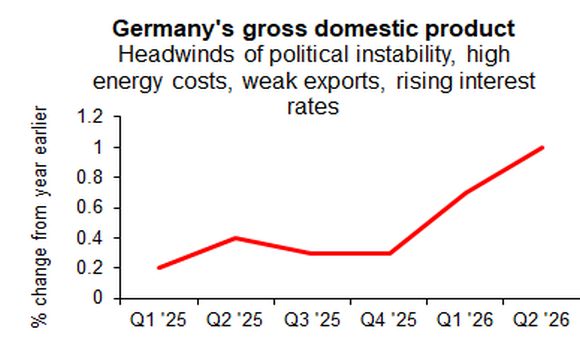
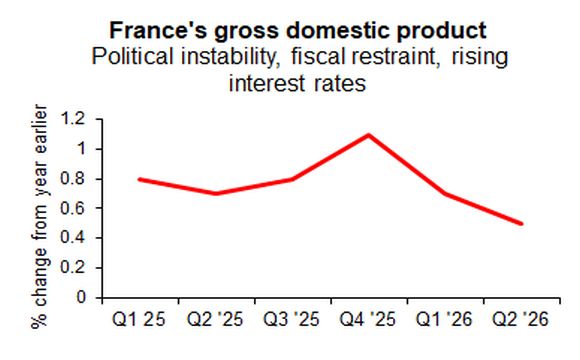
Europe needs peace, cooperation and reasonable energy prices.
Recent Essays
U.S.-China Heads of State Diplomacy
Read More
The most important event of last week’s U.S.-China summit in Washington was the two countries’ decision to reaffirm their commitment to a relationship of strategic stability based on fairness and reciprocity. That, of course, does not mean that such an agreement is a magic wand that will automatically solve many unresolved issues between the two […]
China and India Have a Global Agenda
Read More
Mainstream media reporting about Sino-Indian relations has excessively focused on contested border issues, hostile alliances, trade imbalances and strategic rivalries. Those are all legitimate issues, partly legacies of colonial times, whose importance seems to have acquired a sense of urgency in the wake of China’s remarkable economic development over the last forty years. Western political […]
U.S.-China: Trying Peaceful Competition Through “Constructive Strategic Stability”
Read More
China’s quest for partnership rather than rivalry with the U.S. was an attempt to clarify and stabilize the world’s most important bilateral relationship. Settling for peaceful competition falls far short of that objective. Some may even see that as a semantic trap, or a strategic ambiguity, but the alternative would have been a dangerous path […]
The Euro Area Needs Peace to Resume Economic Growth
Read More
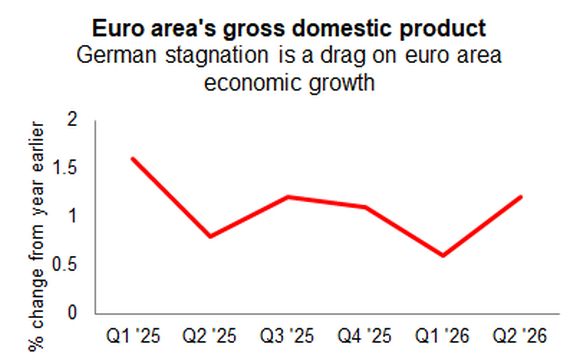
Over the last three years, the economy of the European Monetary Union, or the euro area, has grown at an average annual rate of 0.9 percent. That is significantly below its noninflationary growth potential currently estimated at about 1.6 percent. And the short-term growth outlook is getting worse. There is now a high probability that […]
Archives
America Should Not Pivot. America Is a Center of World Economy
Read More
In a major foreign policy change, President Barak Obama initiated in 2011 a “pivot to Asia” to manage China’s rising regional influence. Obama then followed up in 2013 with an informal summit hosting a newly installed Chinese President Xi Jinping in California Sunnylands. The meeting focused on climate change, cyber security, intellectual property protection, China’s […]
Japan’s Economy Should Go Back to Its Export Driven Growth
Read More
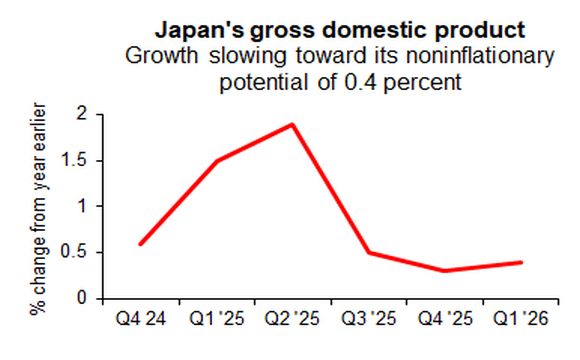
High inflation and overstretched public finances offered no room for a fiscal and monetary stimulus that boosted domestic spending and the economy to an unsustainable 1.7 percent growth rate during the first half of 2025. The governing Liberal Democratic Party (LDP) did it anyway. The stimulus was supposed to help Shigeru Ishida to hold on […]
East Asia’s Strong Contribution to Global Trade Growth
Read More
Last Friday (July 31), the World Trade Organization reported that global merchandise trade increased at a surprisingly vigorous annual rate of 3.2 percent during the first quarter of this year, despite widespread energy shortages caused by Middle East hostilities. That indeed was a surprising result in view of pessimistic trade forecasts by official international organizations, […]
Geopolitical Issues of ASEAN’s China Trade
Read More
China has been the main trade partner of emerging and developing Asia for nearly two decades. During that time, the ASEAN -- association of eleven countries of Southeast Asia -- became the fastest growing segment of the world economy and China’s by far the largest market for its goods and services. In the first half […]
The U.S. and E.U. Face Major Economic Policy Adjustments
Read More
Asset prices in the trans-Atlantic community are changing according to market conditions created by monetary and fiscal policies. In the United States, the key policy interest rate – the effective federal funds rate – is 3.62 percent while the current inflation rate is 4.2 percent. Corrected for inflation, the interest rate reflecting American monetary policy […]
The Dollar Will Be Dominant World Currency for the Foreseeable Future
Read More
Last year, 89 percent of global foreign exchange transactions were executed in U.S. dollars. That important statistic was reported last February by the Bank of International Settlements (BIS), also known as the bank of world central banks. The BIS acts in that capacity by offering international cooperation in support of central banks’ mandate for monetary […]
Business Deals Suggest China and India Are Sorting Out Their Relations
Read More
As BRICS founding members and active partners in the Shanghai Cooperation Organization (SCO), China and India share interests and ties that transcend a difficult colonial legacy along the 4056 kms of contested borders they call the Line of Actual Control. BRICS is an intergovernmental organization founded in Yekaterinburg, Russia, on June 16, 2009. It consists […]
China-Japan: Soaring Trade Despite Fractious Relations
Read More
The two Asian neighbors divided by a strip of water but united for thousands of years by history and culture are now criticizing each other about military buildups and “unprecedented … strategic challenges.” That tense discussion is underlied by contested maritime borders and overlapping territorial claims in East and South China Seas – all of […]
The G7 Is Facing Serious Economic and Security Problems
Read More
The summit meeting of G7 allies (Canada, France, Germany, Italy, Japan, United Kingdom and the United States) in Évian-les-Bains, France, on June 15-17, 2026, has an unusual agenda of military conflicts weakening their structurally unbalanced economies. A particularly precarious situation is observed in the members of the European monetary union (the euro area) where interest […]
Intractable Hostilities Are Driving Rising Energy and Food Prices
Read More
The world energy market is experiencing declining supplies and a prospect of an unprecedented magnitude and duration of severe energy shortages. The European Union (E.U.) was the first region to face those problems in 2014, after the violent change of Ukrainian government and the ensuing unrest in Donbas. That situation markedly deteriorated with the beginning […]